Mickey Mouse Monopoly Scene Analysis

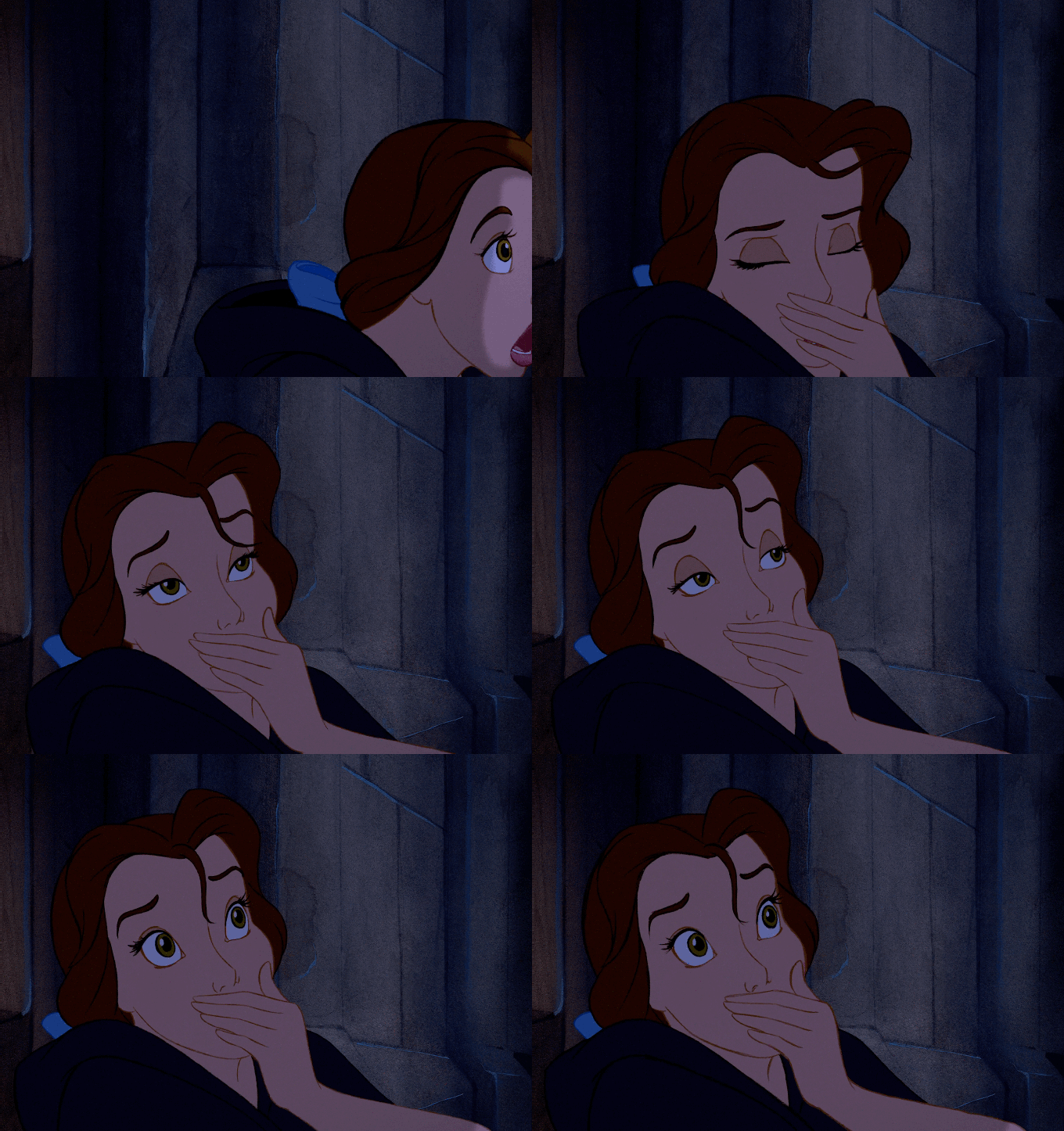
I have chosen to analyze a scene from Mickey Mouse Monopoly that begins with a several young girls watching Beauty and the Beast. They are all between the ages of 6 and 10. They show the tape being put into the VCR, a familiar sight to anyone born before the year 2000. Then they have Dr. Carolyn Newberger, a psychology professor at Harvard Medical School, discuss family violence and how it is a big part of her profession. She claims that when you look at Beauty and the Beast with the mindset that it is encouraging domestic violence you gain a new perspective. Then they show a clip of Beauty and the Beast where Belle is singing about how she is beginning to see a sweeter side in the Beast. Dr. Newberger explains how this movie is demonstrating to children that if you look past the violence and are sweet, there is a prince inside of every beast. She is basically making the point that it is subconsciously showing children that domestic violence can be solved if you stick with the violent person and be nice to them.

This viewpoint is chilling. The way the documentary set it up by simply showing the tape being put in the VCR set the stage for shock value because it hinted at how normal it was. They edited it in a way where the viewer did not realize how this normalcy was bad until Dr. Newberger said her viewpoint. They the camera shows the young girls watching, completely unphased by the Beast’s violence or the plot of the film.

As if this wasn’t alarming enough, the documentary asks two of the girls what they would say to Belle if she was their friend. Their responses were along the lines of them being happy for her but being sad because “she gets yelled at a lot” and to “keep on being nice and sweet like you are and that will probably change him…and in the movie it does.” Ending with the girls really drives Dr. Newberger’s point home to the viewer.

Although I had some issues with the editing styles in my full review, I believe this scene was done to perfection. If they did not set up the scene as they did, demonstrating how common seeing this violence is for children, the results would not be as shocking. Seeing their faces unphased only made an impact because the viewer had just heard Dr. Newberger’s words. After that, the questions to the young girls were even more shocking. They embodied innocence so much that they did not even realize what they were saying. This is raw and authentic which makes it so sad.

Overall, this scene is impactful due to the editing. The order at which the information was presented is key. Additionally, the shots they chose to film of the girls innocently talking and nonchalantly watching made all the difference. I highly recommend everyone to watch this scene, as well at the entire documentary, as it is quite interesting.

Unfortunately, there were no previous reviews of this scene. However, my full review has a comparison of other reviews! To see my review of Mickey Mouse Monopoly, check out my other blog post!
Movie Review: Mickey Mouse Monopoly

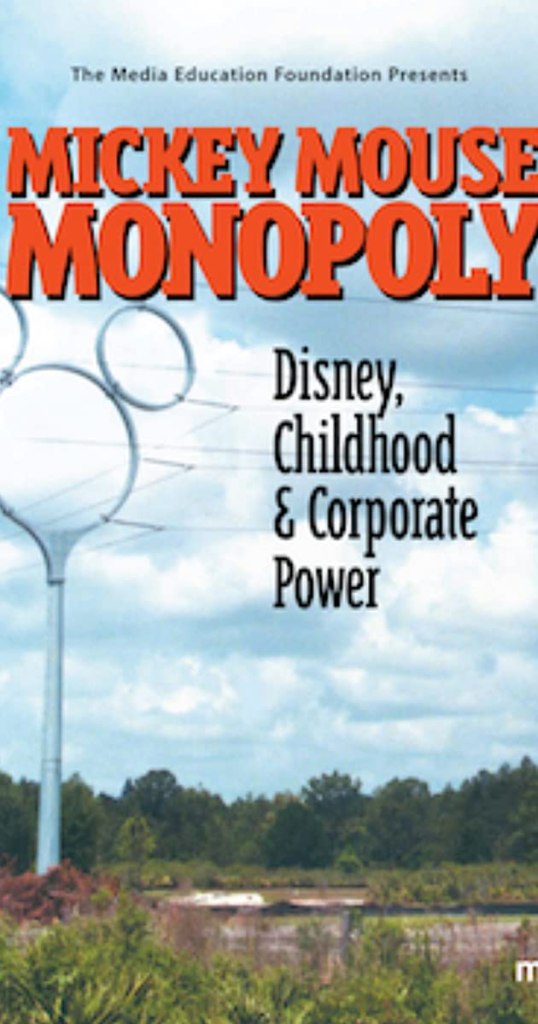
I have recently viewed the documentary Mickey Mouse Monopoly and it was very compelling. The documentary evaluates popular Disney films throughout the years (though it was made in 2001 so it does not include the Disney movies of the past twenty years) and their impact on society. One of the first aspects of Disney that it evaluated was their corporate power. They like to have a portrayal of happiness and innocence; however, they will go to great lengths to make sure no one speaks negatively about them. All their content is heavily copyrighted to the point where many publishers are afraid of being sued or having to jump through multiple hoops to gain approval to use their content or even mention them in publications. This fear of speaking out against them is alarming, especially considering as Americans, we pride ourselves on being a free country. The documentary did a good job at exemplifying that fear with both facts and with the personal touch of those being interviewed.

The documentary also discussed themes of racism and sexism. Disney tends to portray characters of different ethnicities by making them look, sound, and act in antiquated stereotypes. The characters represented by minority groups tend to be the villains in the movies as well. Additionally, there is issue of sexism. Every princess is helplessly in need of the prince or male character to save them. They are also depicted with the same body types and demonstrate an importance and emphasis on sex appeal.

The main concern with these issues is this company’s target segment is children, who are very impressionable. They cannot perceive and analyze what they are viewing, and they begin to relate these movies to their life and values. It is hard to break down the innocence and teach children this harsh reality, especially when Disney movies and products are everywhere. This controlling of the media and the market make it difficult for this issue to be fixed.

However, many do not see the issue with these movies. I, along with many others, grew up with those movies as an impressionable child and I am fine. Part of me believes that too much is being evaluated. I understand that these are problems, but they are just fun movies for children to enjoy. Some reviews disagreed, believing that this corporate machine masked corporate greed and prejudice thoughts into the innocence of children’s movies. Other reviews had mixed feelings. While they agreed that children need to know the problems in these movies, the documentary left out ways to teach children solutions to those evils. Instead, the film just crammed the viewer with information and a moral lesson that they do not understand.

I think the documentary went too far with its criticisms toward the company. They explained how Disney’s mass production of T-shirts, dolls and other products is unfair. They claimed it encourages children to continue to feel the need to buy every aspect of a movie, forcefully immersing children in their products without them knowing. I however, disagree. Disney is a wildly massive corporation that owns many different brands and has absorbed and merged with big companies. They are increasing their sales by marketing all aspects of their movies into toys and fashion. This is a smart business tactic because when their movies are that well known and successful, they know children will want to buy the products.

As a film, there were not many eye-catching or heartfelt moments. This had to do with the awkward cutaways to Disney movies and the random pausing of the movie at an awkward time when returning to the interview. Some dramatic music or a black screen with several statistics popping up are common tactics that documentaries use that could have been more helpful. They could have made the editing more cohesive and made it flow as a film. The information was strong, and the people being interviewed were great assets to back up the point they were trying to make. However, there were many “jaw-dropping” moments that could have been more impactful if they were emphasized in a greater volume.

Overall, I am in support with a lot of this documentary. The fear that people and publishers have to speak out against Disney is frightening. No company, no matter how big or powerful, should have that hold over people. Many critics will easily tear apart Apple and Amazon, so the reason they are afraid to do the same with Disney involves more than corporate size. I also think that these prejudice characters are frightening, especially because many of the movies analyzed were only made 30 years ago. Children are subconsciously absorbing these characters and incorporating them into their thoughts on people, culture, and the world around them which is alarming. However, in the past two decades, Disney has made a greater effort to be more progressive. Moana had no love interest and Frozen focused on sisterly love. They also added an African American princess Tiana. Although, these are baby steps compared to how they will have to reevaluate their common movie themes if they want real change.

I think that documentaries like these are important to review. I really liked “Mickey Mouse Monopoly” and I think everyone should view it, especially parents so they know what discussions to have with their children. It was informative, and well organized. To conclude, I didn’t agree with everything in this documentary and I think it could have been better with improved production, but I enjoyed it.

Check out my other blog post on my analysis of a scene from this documentary. Also, for a sneak peek of the documentary itself, check out this clip!

Disney’s Tangled is being Compared to COVID-19

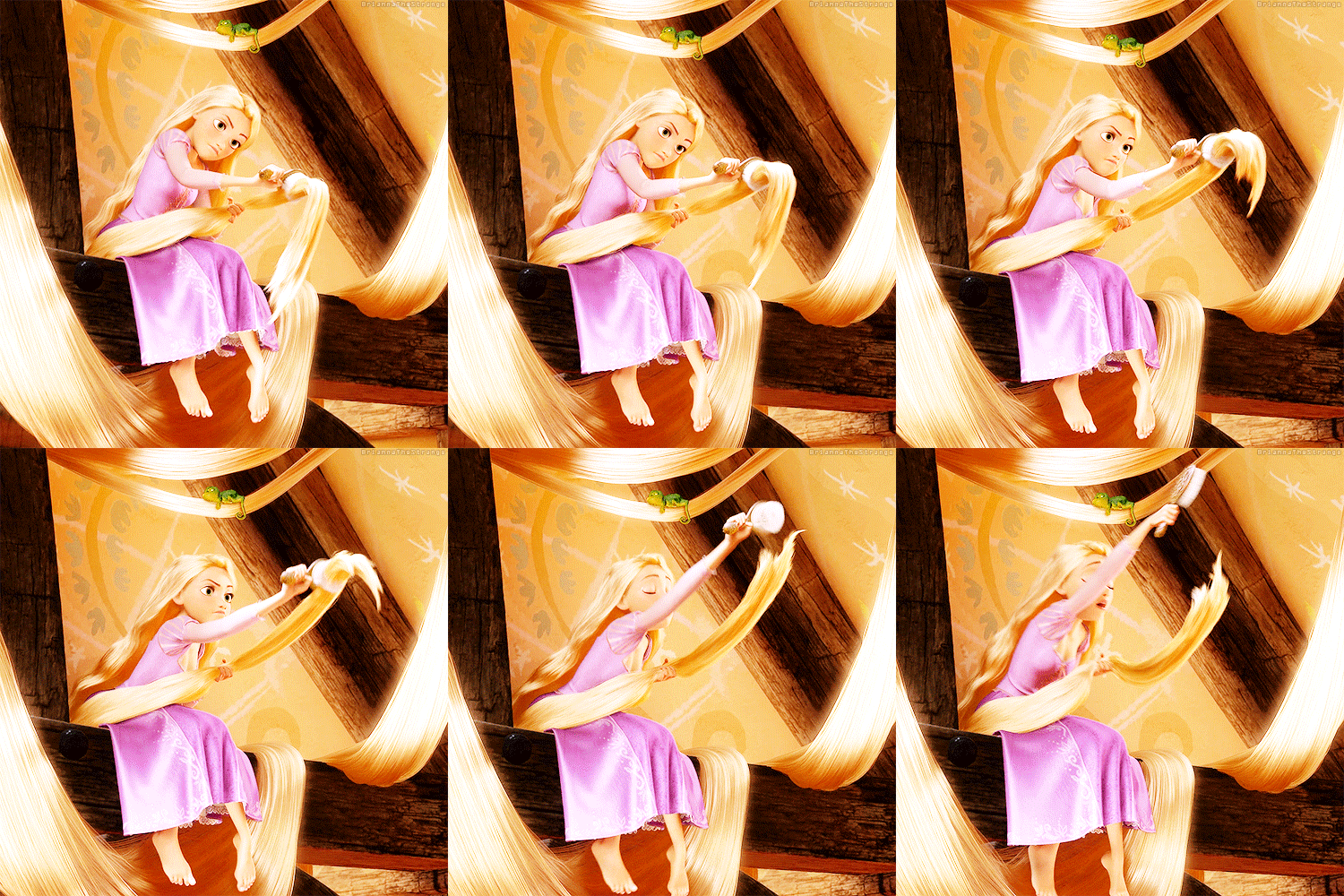
When I first heard that Walt Disney’s Tangled, a modernized version of the story of Rapunzel, was being compared to the current pandemic I just rolled my eyes. After analyzing it a bit more, however, I do see some similarities. Although, let me be clear that I do not think it is some conspiracy theory or that this was a prediction/foreshadowing of any kind (but I know there are many compelling cases otherwise). I just think it is interesting, and humorous. The story involves a girl who was lived her life locked in a tower away from the outside world. People are comparing this to quarantine.

However, what is also interesting is that she lived on the island of Corona! That’s right – Corona! So it is a little strange that the movie is based on a girl living in lock-down in an island called Corona and now the world is on lock-down because of the coronavirus. One has to admit that it is a little freaky! Especially because one of the songs is about her trying to pass the time because she is bored all day…something many people can relate too at this point and time. Anyway, it’s definitely interesting. I am not sure what Disney’s statement is on this (if they have one) but I know that social media has been buzzing and there are more memes about this every day!

Venice’s Waters are Cleaning Up

We are in the midst of this pandemic and there is no doubt that these are trying times for many. That is why I would like to spread some positive news this week in my blog posts. This pandemic is devastating and stressful and is affecting many. However, the self-quarantining around the world has had some positive effects on the nature around it. For example, look at Venice. Although it is a beautiful city Venice has murky waters. This city is built around the canals so there is plenty of traffic on the waterways, such as water taxis, boats, and of course, the gondolas for the tourists. However, since the everyone is in isolation the has traffic stopped, and for the first time in decades the water is clear. You can see the fish through the water and some swans and ducks have come on the canals. Though this is due to a reduction in pollution, as the air is less polluted from the boats and water taxis, the another reason the canals are clear is because of the lack of movement. The reduction of traffic has caused the canal water to settle and the dirty parts to go to the bottom. So at least the city’s canal system is benefiting from this isolation!

If that doesn’t out you in the Italian mood, here’s a Soundcloud I found of Italian-style music

“Two Years of Living Randomly” Discussion

After viewing the Max Hawkins TED Talk “Two Years of Living Randomly” I was quite intrigued. Hawkins explained that his life in basically an algorithm. Every decision he makes is based on random computer generators. His diet, his travel plans, he is plans on a Friday night, the music he listens to…literally everything is random. He spent two years living in random destinations throughout the world and interacting with people through random events. This whole ideology is very hard for me to wrap my head around. I am a very organized person who likes to be in control of things and relinquishing that control to that extent is almost impossible to image. However, it does make me wonder how much in my life is controlled. Many data algorithms is are based on past experiences. Sometimes it would be nice to go outside the norm and try something new. How much of our life is controlled? Is leaving everything up to random data relinquishing control or regaining it? Overall, this TED Talk was an interesting approach to an ideology and way of life that I did not know existed. Although it was very interesting, it is not something that I will be trying any time soon.

Photoshop Exporting

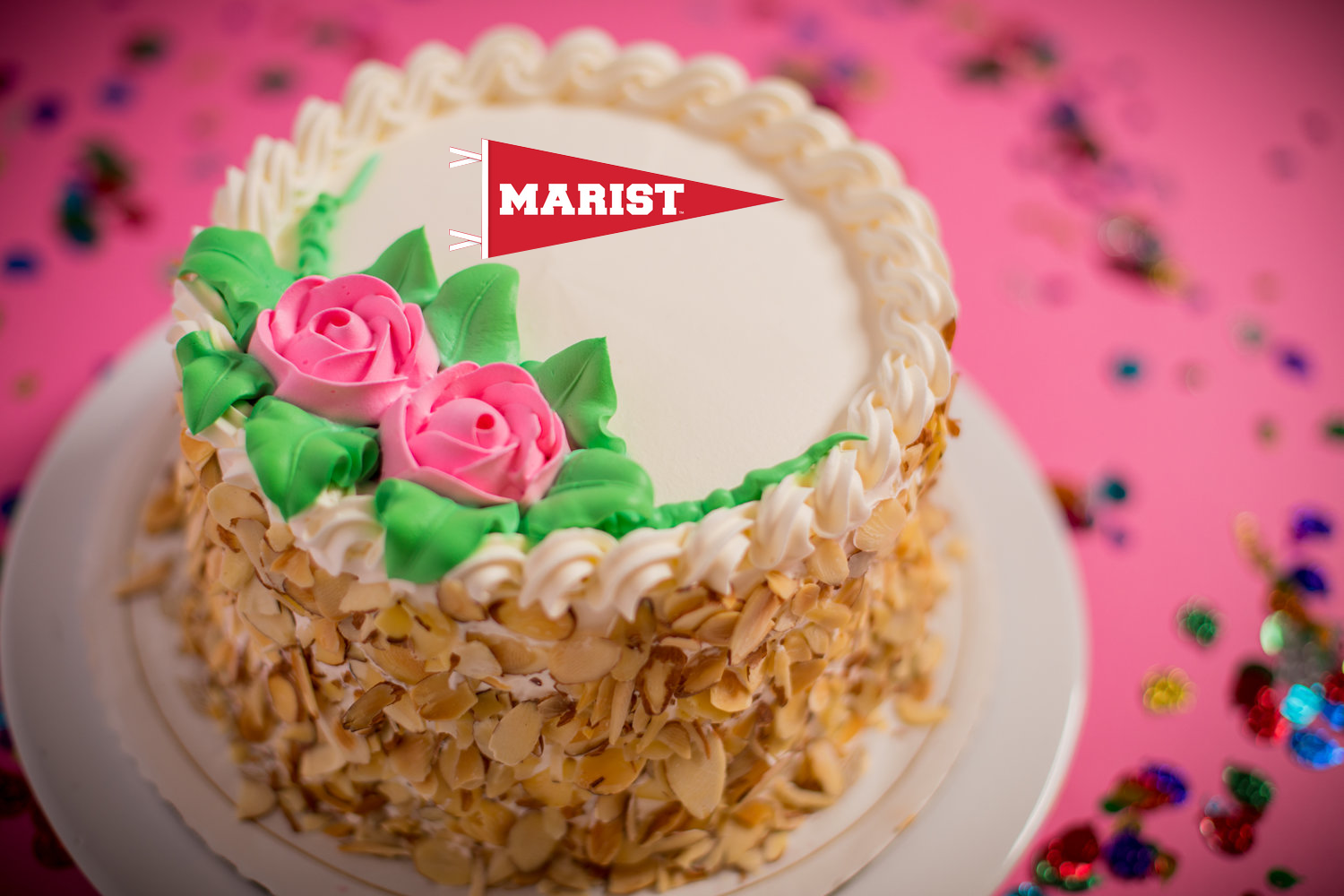
Adobe Photoshop can be intimidating at first but it can be quite simple when one learns how to use it. For instance, if you want to Photoshop a tangible image, you can scan, up load it and then edit it into Photoshop. However, that can be time consuming, and the image you want might not be tangible. Therefore, it is much easier to use Photoshop by creating images from the internet. In this example, I got a picture of cake from Google Images. Then I got a an image of a Marist flag which I Photoshopped onto the cake. By exporting both of these images onto Photoshop, I was able to create something unique.

Super Bowl Advertisements of 2020

As always, the Super Bowls advertisements this year were watched by millions and have a lot to say. There are already a multitude of lists of the best and worst ads this year. One that I would like to focus on is the Mr. Peanut ad. Prior to the Super Bowl, Planters decided to film an ad that involved the death of Mr. Peanut. He was driving and the car swerved off of a cliff. He was hanging on a branch (that was breaking) and decided to sacrifice himself by letting go to save his friends. The main purpose was to create media buzz and get people talking about this fictional character that has been around for over one hundred years. However, a couple days after the ad was realized, Kobe Bryant and his daughter, along with others died in a helicopter crash. Although the ad had nothing to do with Kobe Bryant, it might be seen as in sensitive to show a peanut crashing in the middle of a field, as it was similar to Bryant’s death.

Planters was planning on showing a funeral ad but the media was unsure if they would go through with it, However, they did and the ad aired during the Super Bowl, as planned. They had famous actors at Mr. Peanut’s as well as other fictional characters, such as Mr. Clean and the Kool Aid main. However, their tears enabled the soil to grow the peanut, bringing him back to like as “baby nut”.

The Dangers of Deepfake

This video describes the newer process of a deepfake, which takes real videos and real content and turns them into something that is false. This gets confusing because the content is seemingly real and it is hard to decipher that it’s fake. In the video, the examples given of deepfake were quite obvious as a means to show its capabilities but what happens when it is done in a more subtle way? It can ruin people and careers. Additionally, all content (deepfake and actual) is now loosing credibility. As a society we don’t know what is real and what isn’t which makes us question everything.

Greta Thunberg Heavy Metal Juxtaposition

This video shows Greta Thunberg’s famous “how dare you moment.” She is angry and frustrated at current world leaders and that she, a child, has to demonstrate the importance of climate change. Her speech during this Q&A went viral and is a well known moment that will be remembered throughout history. However, in the creator of the video below took a different approach. Using filters, voice editing and heavy metal music, the creator makes this speech sound very dark and apocalyptic. Greta’s anger is what is being highlighted here. In the original video, she demonstrates emotions of anger, sadness and fear, but anger is what is demonstrated and exemplified.

Design a site like this with WordPress.com
Get started